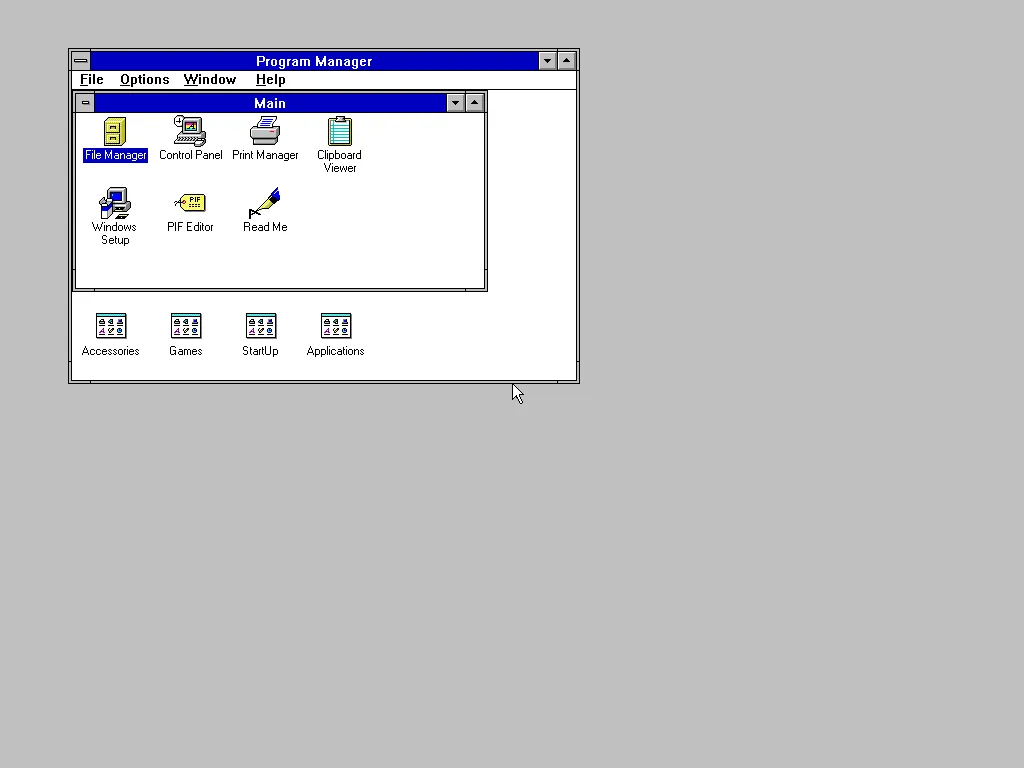
Microsoft, 1992. Windows.
Windows 3.1 was released to manufacturing on 6 April 1992. Earlier versions of Windows ran as a shell on top of MS-DOS. Windows 3.1’s 386 Enhanced Mode instead worked as a virtual machine monitor, with MS-DOS running as its guest, and the MS-DOS Executive was gone. It was the last 16-bit version of Windows. For the first time, Microsoft advertised Windows on television, with a campaign that began on 1 March 1992.
It introduced TrueType scalable fonts, including Arial, Courier New and Times New Roman, as an alternative to Adobe Type Manager. It also brought screensavers, Media Player, Sound Recorder and the Windows Registry, and it could use more memory than earlier versions. File Manager gained a split view and could move files by drag and drop.
Its predecessor, Windows 3.0 from 1990, sold about 10 million copies. Windows 3.1 sold more than three million in its first three months. Microsoft followed it with Windows for Workgroups, the first version of Windows with built-in networking, and in November 1993 with the minor update Windows 3.11. Windows 95 succeeded it, and support ended on 31 December 2001, except for the embedded version, which was retired in 2008.
This exhibit starts in Program Manager, with its Main group open and the Accessories, Games, StartUp and Applications groups below.